
Pea Gravel vs Crushed Stone: Shape, Compaction and Use
Rounded pebbles and angular stone behave differently underfoot. Learn which product details matter for a decorative surface, a firmer path or a specified drainage layer.
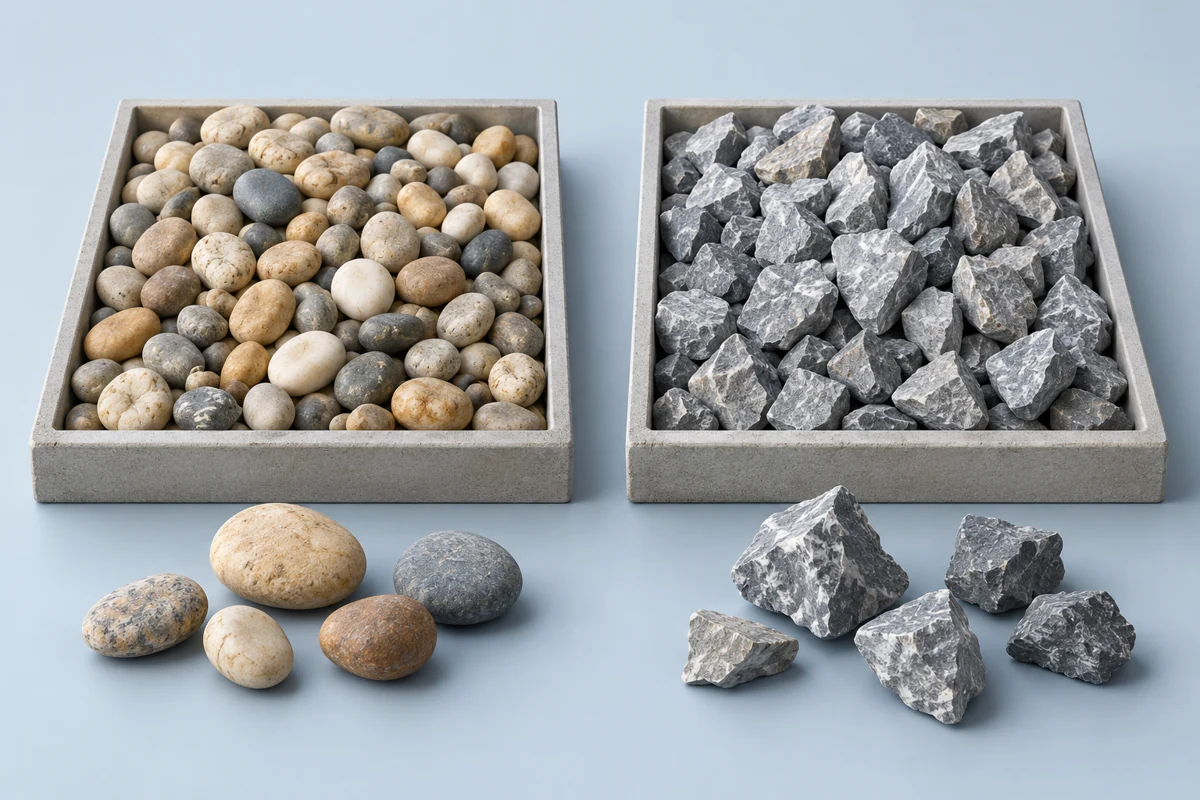
In a pea gravel vs crushed stone choice, start with shape and grading. Rounded pea gravel tends to move as its particles roll past each other. Angular crushed stone can interlock more readily, but a clean, single-size stone and a graded blend containing fines will not form the same surface.
There are three products to distinguish, not just two
| Product | What to notice | Question before ordering |
|---|---|---|
| Rounded pea gravel | Smooth, rounded particles; typically remains a loose surface | How will the edges contain it, and will movement be acceptable? |
| Clean crushed stone | Angular particles with relatively little fine material between them | Does its size and grading match the specified drainage or aggregate layer? |
| Dense-graded crushed aggregate | A blend of sizes, including smaller particles and fines | Is this the specified product for the compacted base or surface? |
“Crushed stone” describes how the stone was produced, not a complete installation specification. Ask for the actual product description or grading. Names such as crusher run, road base and minus material can mean different blends between suppliers.
Pea gravel or crushed stone for a walkway?
For an informal decorative area, rounded stone may give the appearance you want. Its movement is the trade-off. University of California Master Gardener guidance notes that rounded gravel can shift under feet and furniture, while suitable angular material can form a firmer surface.
Before choosing, think about who uses the route and what moves over it: shoes, narrow chair legs, stroller wheels or a garden cart. A smooth-looking pebble is not the same thing as a firm walking surface. If you need an accessible route, choose a system designed for the applicable requirements rather than assuming a loose gravel product qualifies.
At the supplier's yard, inspect the full mix as well as a single attractive stone. Ask to see an installed sample when available. That gives you a more useful comparison than photographs of dry product piles.
Will pea gravel compact like crushed stone?
Rounded pea gravel can settle into a closer arrangement, but it does not lock into the same tight surface as an appropriate angular, graded material. Running a compactor over it does not change the shape of the particles. Edging helps contain migration; it does not transform loose pebbles into a structural base.
Likewise, angular shape alone does not make every crushed product suitable beneath paving. CMHA distinguishes standard dense-graded paving assemblies from open-graded alternatives with their own conditions. Follow the selected pavement system's specification instead of swapping products because both are sold as gravel.
For drainage, inspect the fines as well as the shape
Water needs connected spaces through the installed aggregate. A blend designed to pack tightly is a different purchase from clean stone selected for a drainage system. Ask for the required size, cleanliness and grading rather than ordering “crushed stone” and expecting every load to drain alike.
The surrounding soil, outlet and separation details also affect a drain's performance. A pile of porous-looking rock is not a drainage design. This guide helps identify the material question; it does not set trench dimensions, base thickness or a universal compaction allowance.
Write the product down before estimating the order
Record the supplier's product name, particle-size description and whether fines are included. Then use the gravel calculator for the measured quantity and any supplier-provided density. If quotes use different sale units, the ton-versus-cubic-yard guide explains how to compare them without assuming all gravel has the same weight.
Sources
UC Master Gardener Program: Gravel Pathways in the Garden explains rounded and angular surface behavior. CMHA's guidance on open-graded aggregates distinguishes paving assemblies, while its bedding sand selection guidance discusses aggregate grading and particle migration. These support the distinctions above, not a universal path or driveway specification.
More guides for your project
All guides