
Concrete vs Cement vs Mortar: What Are You Buying?
Cement is an ingredient; concrete and masonry mortar are different mixes. Read the product name and the preparation instructions before a similar-looking bag goes into your cart.
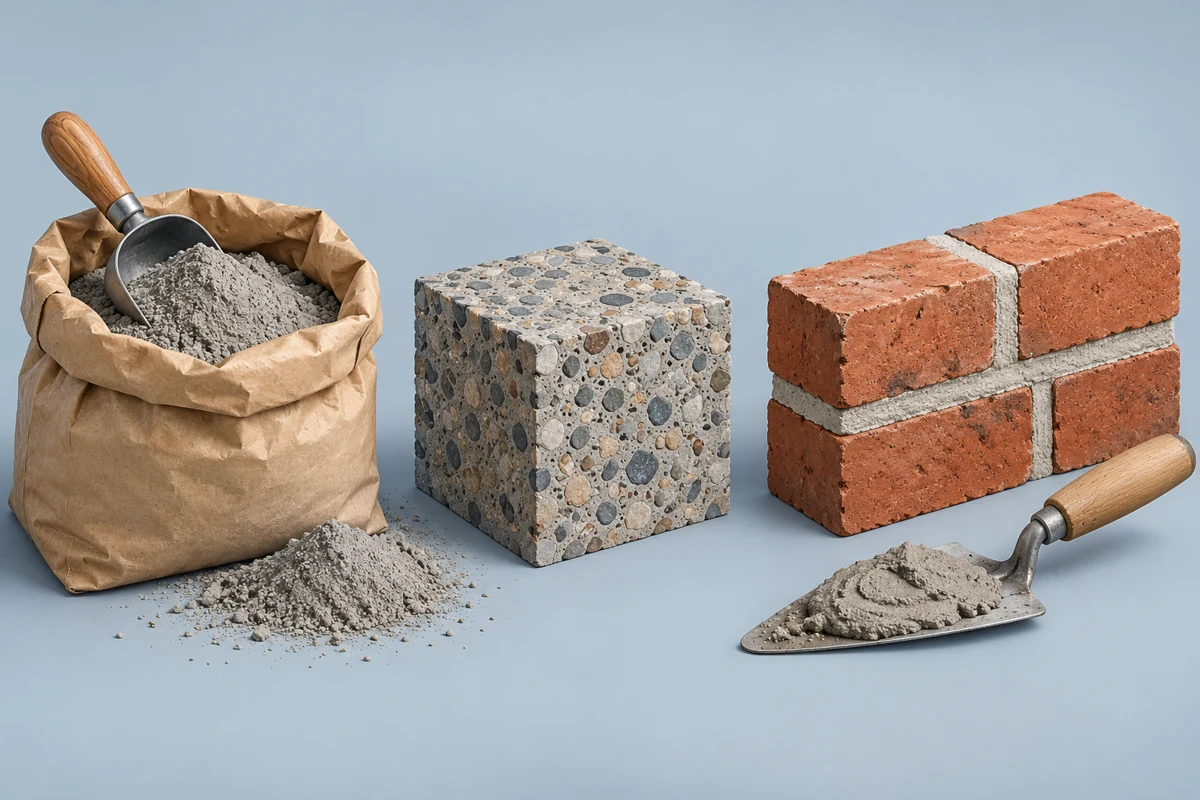
The concrete vs cement vs mortar distinction matters at the store because similar bags can contain very different materials. Cement is a binder used as an ingredient. Concrete combines a cementitious binder, aggregates and water. Masonry mortar is formulated for joints between masonry units. They are not substitutes just because all can harden.
Read the full product name
| Label | What it describes | Before buying |
|---|---|---|
| Portland cement | A cement ingredient, not a complete bagged concrete mix | Confirm the specified mixture and additional materials; do not assume water alone makes the concrete required |
| Concrete mix | A prepared blend for making concrete, commonly including sand and coarse aggregate | Check application, placement limits, mixing instructions and yield |
| Mortar mix | A blend intended for masonry mortar, generally including the required sand | Check mortar type, compatible masonry and directions |
| Masonry cement | A binder product for making masonry mortar | Check the sand and water additions required by its instructions |
That last pair is an easy shopping mistake. A bag marked masonry cement and a bag marked mortar mix may both refer to a mortar type, yet one still requires sand. QUIKRETE's Masonry Cement instructions, for example, specify adding mason's sand; its prepared mortar products have different preparation instructions.
Pouring a form? Identify the concrete product
If your project specifies concrete, a cement-only bag does not contain the same ingredients as a packaged concrete mix. Equally, the word “concrete” does not make every repair compound or specialty mix suitable for a full-depth pour. Read the intended use and allowable placement conditions on the selected product.
The finished amount is a volume. Once the product is selected, the concrete calculator can estimate that volume and whole bags using its stated yield. If you are unsure which package number to use, reading concrete bag yield explains weight, mixed volume and coverage.
Laying or repairing masonry? Match the mortar to the work
Mortar must work with the masonry and the application. Choosing the largest strength number on the shelf is not a complete selection method. A new wall and repairs to older, softer masonry can have different requirements; use the specified mortar rather than inventing a substitution from a general comparison.
A concrete mix containing coarse aggregate is not a direct replacement for joint mortar. And masonry mortar should not be treated as a generic substitute for concrete in a slab. The material's formulation and purpose matter, not just whether it can be spread or poured.
Does cement just dry when water is added?
No. Hydraulic cement hardens through chemical reactions with water. “Let it dry out” is therefore not an adequate curing instruction for a cement-based product. Follow its mixing and curing directions; extra water, heat or rapid drying is not a shortcut to the advertised performance.
You do not need a cement chemistry lesson to buy correctly. You need the precise product name, its application and the instructions for what to add and how to use it.
A quick check at the counter
- Write down the actual job: pouring specified concrete, laying masonry or making a particular repair.
- Match the bag's application to that job; ask about any unclear limitation.
- Read whether to add water only or additional ingredients.
- Use that product's yield or coverage when ordering quantities.
Do not ask only for “cement” if you mean a complete concrete mix. A photo of the specified product label or a written product name is more useful than a broad material nickname.
Material and product references
The American Concrete Institute's material definitions distinguish cement, concrete and mortar. QUIKRETE Masonry Cement, its mortar mixing instructions and Concrete Mix No. 1101 show why the complete product name matters. This guide identifies materials; it does not prescribe a structural mix or a mortar type.
More guides for your project
All guides